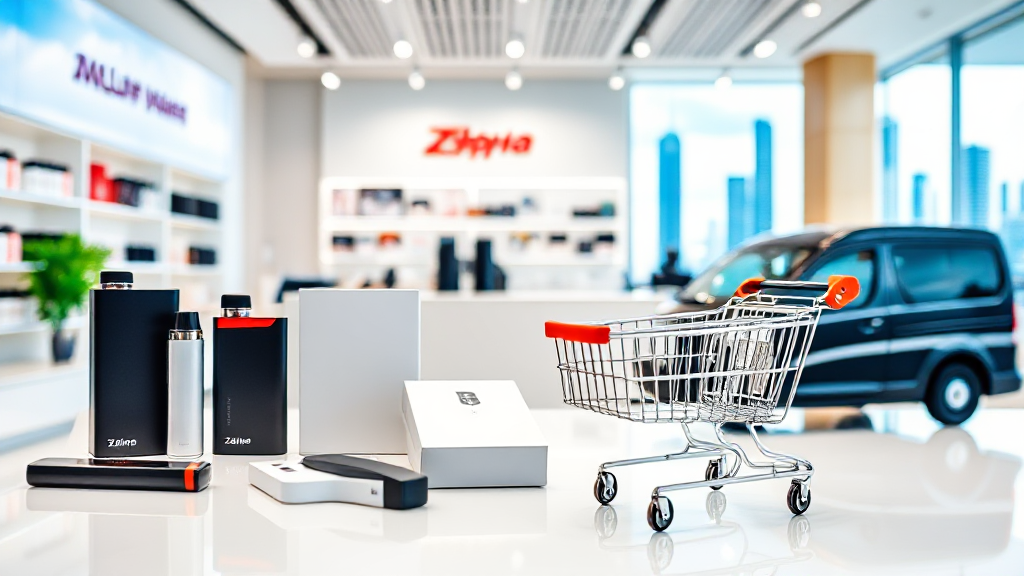
Auditing a Lana Ultra 2 Listing: What Holds Up and What Does Not
I have bought enough vape hardware online to know that a product page is not a specification sheet. It is a sales document. Every line on it, from the puff count to the battery claim to the “authentic” badge, is a statement someone wants me to believe. Some of those statements survive contact with reality. Some do not. So when I landed on a listing for a lana pix device, I decided to stop reading it like a shopper and start reading it like an auditor. Below is what I found, claim by claim, with a verdict under each one. If you are the kind of buyer who has been burned before, this is the format you want.
Claim One: Puff Counts Are Precise Numbers
The first thing any listing wants you to absorb is a big number. A device page might advertise 9,000 puffs, another 12,000, another 20,000. The lana pix 20k listing leans hard on that figure, and it is the kind of number that makes a product feel like better value per dollar than the device sitting next to it.
Here is the problem. Puff count is not a fixed measurement the way battery capacity in mAh is. It is an estimate derived from a set of assumptions: how long each puff lasts, how much e-liquid each puff vaporizes, and how the device is used. A manufacturer testing with two-second draws will get a much higher number than a user taking five-second draws. Two people using the same device can honestly report wildly different puff totals, and neither is lying.
What this means for the listing is not that the number is fraudulent. It means the number is a ceiling, not a promise. Treat 20,000 as the best-case scenario under ideal conditions, and you will rarely be disappointed. Treat it as a guarantee and you will feel cheated by week two.
Verdict: Holds up only as a marketing estimate. The number is directionally useful for comparing devices within the same brand family, but it is not a measurable specification. Discount it by a meaningful margin before you decide what you are actually paying for.
Claim Two: The Device Is Genuine and Authentic
Every vape listing in the world claims authenticity. The word appears on legitimate pages and counterfeit pages with equal confidence, which is exactly why it is worthless on its own. What matters is whether the claim is backed by something checkable.
On this listing, the useful signals are the ones you can verify independently: whether the seller names the product line specifically rather than using vague language, whether the packaging shown matches what the brand actually produces, and whether the retailer has a track record of stocking the same brands consistently. A store that lists lana ultra 2 alongside other recognizable devices from the same manufacturer is easier to trust than a page selling one suspiciously cheap unit with no brand context.
The other checkable element is the verification method itself. Many modern disposables include a scratch-off code or QR label on the packaging. If a listing mentions that, it is a good sign, because it means the seller expects you to verify rather than just believe. If the page relies entirely on the word “original” with nothing behind it, that is a yellow flag.
Verdict: Partially holds up. The authenticity claim is credible when it comes with a verification path and a seller who stocks a coherent brand lineup. It does not hold up when it is just an adjective with no mechanism behind it.
Claim Three: Fast Delivery and Cash on Delivery Are Real Conveniences
Delivery promises are the easiest claims to test and the ones buyers complain about most. “Fast delivery” can mean same-day, next-day, or “sometime this week,” and sellers rarely define it. Cash on delivery is a stronger claim because it changes the risk structure entirely: you pay when the package is in your hands, which means a seller offering it is accepting more risk than one demanding upfront payment.
For buyers in Singapore, this matters more than almost any other feature. A listing that offers cash on delivery is effectively saying the transaction is reversible at the doorstep. If the box arrives and something is wrong, you have leverage. That is not a marketing flourish; it is a structural advantage, and it is worth more than a slightly lower headline price from a seller who wants a bank transfer before shipping.
Discreet packaging is the companion claim here. It is harder to verify in advance, but it is also low-stakes: either the box is plain or it is not. What you can check is whether the seller describes it at all. A store that mentions discreet packaging is at least aware that buyers care about it, which tends to correlate with better overall handling.
Verdict: Holds up, with a caveat. Cash on delivery is a genuinely meaningful claim because it shifts risk to the seller. Fast delivery is only as good as the seller’s definition of fast, so look for a stated timeframe rather than an adjective.
Claim Four: Bigger Puff Counts Mean Better Value
This is the claim that hides inside the pricing, and it is the one most buyers never examine. The logic seems obvious: more puffs for a similar price must be better value. But puff count is only one variable, and it is the least reliable one.
Consider a device like the lana pen plus 9k. A 9,000-puff device and a 20,000-puff device are not simply small and large versions of the same experience. They may differ in battery size, coil design, airflow, and flavor intensity. A higher puff count often comes with a larger battery and a bulkier body, which is not automatically better if you wanted something pocketable. It can also mean a longer lifespan for the same coil, which affects flavor quality near the end of the device’s life.
Value, properly calculated, is puffs per dollar adjusted for how much you actually enjoy the last third of the device. A cheap high-count device that tastes flat after 60 percent of its capacity is worse value than a lower-count device that stays consistent throughout. The listing will never tell you this, because the listing benefits from you comparing raw numbers.
Verdict: Does not hold up as stated. Puff count is a rough proxy for capacity, not a measure of value. Compare devices on battery, form factor, and flavor consistency before you let a big number make the decision for you.
Claim Five: The Brand Lineup Suggests a Reliable Seller
One of the more useful things you can audit is not a single claim but the shape of the catalog. A seller stocking one or two devices is a different proposition from a seller stocking a consistent range across multiple product families. When you see listings for marbo 25k, marbo vape 25k, and snowwolf 16k sitting alongside the Lana devices, that tells you something about sourcing. A store that can carry several established lines is more likely to have real supplier relationships than one whose entire catalog is a single no-name product.
This is an inference, not proof. A wide catalog can also mean a reseller who buys whatever is cheap that month. But the combination of recognizable brand names, consistent naming conventions, and a coherent category focus is a better signal than any single badge on a product page. It costs a seller more effort to maintain that kind of catalog, and effort is a weak but real proxy for legitimacy.
There is a second angle here that matters for buyers in Singapore specifically. Listings for terea singapore products and similar items show that the seller is oriented toward the local market rather than running a generic international storefront. Local orientation usually means local logistics, which is what makes the delivery and cash-on-delivery claims plausible in the first place.
Verdict: Holds up as a soft signal. Catalog breadth and brand consistency are not proof of authenticity, but they are reasonable evidence that the seller is operating a real retail operation rather than a one-off scam page.
Claim Six: The Product Photos Represent What You Receive
Product photography is the least scrutinized claim on any listing, and it is quietly one of the most important. The image shows a device in a particular colorway, with particular packaging, at a particular size relative to a hand or a table. If that image was pulled from a manufacturer’s marketing library rather than taken of actual stock, it may not reflect what ships.
The audit here is simple but rarely done. Check whether the photos look like a consistent set from one source or a mix of stock renders and real shots. Check whether the colorway you want is actually shown or whether you are choosing from a dropdown that does not match the picture. Check whether the packaging in the photo is the retail packaging or a generic mockup. None of these checks require special knowledge, and all of them catch problems before money changes hands.
The reason this matters is that most disputes after delivery are not about whether the device works. They are about whether the device matches what was pictured. A seller who shows accurate photos of real stock is signaling that they expect the transaction to end without a return.
Verdict: Unverifiable in advance, but auditable. You cannot confirm the photos are real until the package arrives, but you can check for internal consistency, and inconsistency is a reason to slow down.
Claim Seven: The Price Reflects the Product’s True Position
The final claim is the price itself, and it is the one buyers trust most and question least. A price is a statement about where a product sits in the market. If a device is priced well below every comparable listing, that is a claim: the claim that this seller has found a way to offer the same product for less. Sometimes that is true, because of bulk purchasing or lower overhead. Sometimes it is not, because the product is not the same product.
What I look for is whether the price is plausible relative to the rest of the catalog. A store where every price is consistently in the same band is easier to trust than one with a single outlier that looks too good. The outlier is where the risk lives, whether it is a counterfeit, a clearance item in a discontinued colorway, or a listing error that will be canceled after you pay.
The honest conclusion after auditing all seven claims is that a product listing is not a source of truth. It is a set of assertions, some of which are verifiable, some of which are estimates dressed as facts, and some of which are pure positioning. The Lana Ultra 2 listing holds up best on the claims that change the risk structure, like cash on delivery and a coherent brand catalog. It holds up worst on the claims that are designed to make you compare numbers rather than experiences, like puff count and headline price. Read every line as a claim, decide which ones you can actually check, and let the checkable ones carry the decision. That is the whole audit, and it is the only part of the process you control before the box arrives.
